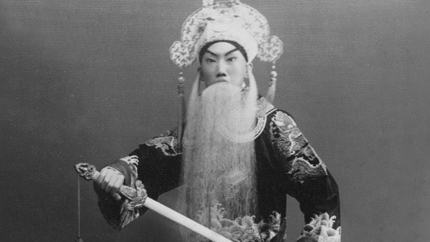
Yang Baosen
Introduction
Yang Baosen (1909-1958) was an illustrious master of Peking Opera, renowned for his significant contributions to the art form. Specializing in the portrayal of laosheng, or old male roles, Yang Baosen developed a unique singing technique known as yang pai, or Yang style. His legacy continues to influence Peking Opera performers across China. Peking Opera itself is a revered traditional Chinese art form that integrates singing, dancing, martial arts, and acrobatics, with a history that spans over 200 years. In 2010, Peking Opera was declared an Intangible Cultural Heritage of Humanity by UNESCO. Yang Baosen's work remains celebrated, with various shows commemorating his contributions and performances.
Early Life and Education
Born in Beijing, Yang Baosen was introduced to the world of Peking Opera at a young age. His grandfather, Yang Guiyun, and his father, Yang Xiaofang, both accomplished Peking Opera artists, played pivotal roles in his early education in the art form. Yang began learning Peking Opera at the age of eight, an early start that would set the foundation for his future success. By the age of 14, Yang Baosen made his debut on stage, showcasing the skills and techniques honed under the guidance of his family. This early exposure to Peking Opera allowed him to immerse himself deeply in the cultural and technical aspects of the art, ultimately enabling him to carve out a unique path in the world of Chinese opera.
Career
Rise to Fame
Yang Baosen's ascent to fame in the Peking Opera scene was marked by his exceptional talent and innovation. He founded his own Peking Opera troupe, Bao Hua She, which became a platform for his artistic expression and experimentation. His rise was further facilitated by his solid performing techniques and distinctive high-pitched voice. Collaborating with renowned Chinese musicians such as Yang Baozhong, who played the huqin, and drummer Hang Zihe, Yang was able to refine and define his personal performing style. His unique style not only captivated audiences but also established Yang Baosen as a leading figure in Peking Opera.
Notable Performances
Throughout his career, Yang Baosen delivered numerous performances that solidified his position as a master of Peking Opera. Some of his most classic pieces include "The Generals of the Yang Family," which narrates the tale of a loyal military family during the Song Dynasty, and "Ji Gu Ma Cao," adapted from the stories of the "Romance of the Three Kingdoms," a 14th-century novel by Luo Guanzhong. These performances are celebrated for their intricate narratives and the depth of emotion that Yang Baosen brought to each role. One of the highlights of his career was the premiere of "Wu Zixu" in Shanghai in 1943, a piece that achieved great success despite Yang's subsequent health issues preventing further performances of its full-length version.
Contributions to Peking Opera
Yang Baosen's contributions to Peking Opera are profound and enduring. He is credited with promoting and transforming the performing style of laosheng roles, especially in terms of singing. His efforts in this area have had a lasting impact on the evolution of Peking Opera. Yang Baosen's innovative techniques and artistic vision helped elevate the art form to new heights, ensuring its continued relevance and appeal to modern audiences. His dedication to Peking Opera went beyond performance; he played a crucial role in nurturing talents and shaping the future of the art.
Legacy and Influence
Yang Baosen's legacy in Peking Opera is profound, with his influence extending far beyond his lifetime. His unique style and exceptional performances have inspired generations of Peking Opera artists. The tradition of Yang's performing style is kept alive through the efforts of artists like Yang Naipeng, who studied with Yang Baozhong, and Yang Naipeng's son, Yang Shaopeng, who performs with the Jingju Theatre Company of Beijing. Yang Baosen's impact on Peking Opera is comparable to the influence of contemporary popular music, reflecting the widespread appreciation and emulation of his work.








